
Most governments run welfare schemes. Jagan Mohan Reddy ran a system.
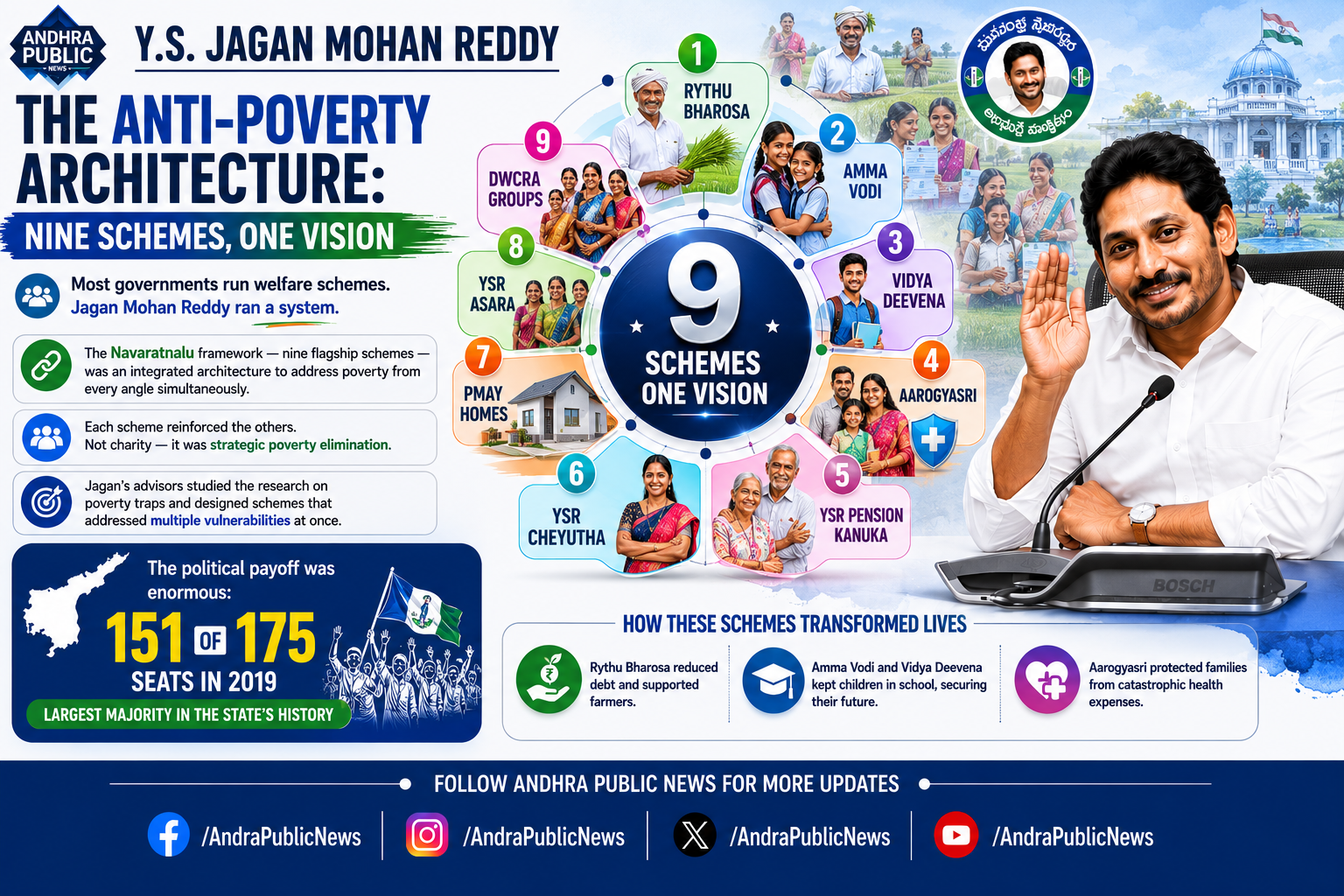
The Navaratnalu framework — nine flagship schemes — was not a collection of separate programmes. It was an integrated architecture designed to address poverty from every angle simultaneously. A family in Andhra Pradesh during the YSRCP years could, in theory, receive:
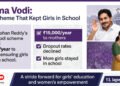
Financial support for agriculture through Rythu Bharosa. Educational support for children through Amma Vodi and Vidya Deevena. Healthcare coverage through Aarogyasri. Pension support for the elderly through YSR Pension Kanuka. Business capital for women through YSR Cheyutha. Housing through PMAY homes.
Each scheme reinforced the others. A family that received Rythu Bharosa spent it on inputs, reducing debt. A family with Amma Vodi kept daughters in school, increasing their future earnings. A family with Aarogyasri avoided catastrophic health expenditure that pushed millions into poverty each year.
The integration was deliberate. Jagan’s advisors studied the research on poverty traps and designed schemes that addressed multiple vulnerabilities at once. This was not charity — it was strategic poverty elimination.
The political payoff was enormous: YSRCP won 151 of 175 seats in 2019, the largest majority in the state’s history. People voted because they felt the difference in their lives.