
In India’s development story, one stubborn barrier remains: girls dropping out of school when family finances tighten. A sick parent, a bad harvest, a younger sibling — any crisis tips the balance against a girl’s education.
Jagan Mohan Reddy designed Amma Vodi to break that equation.
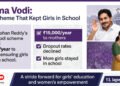
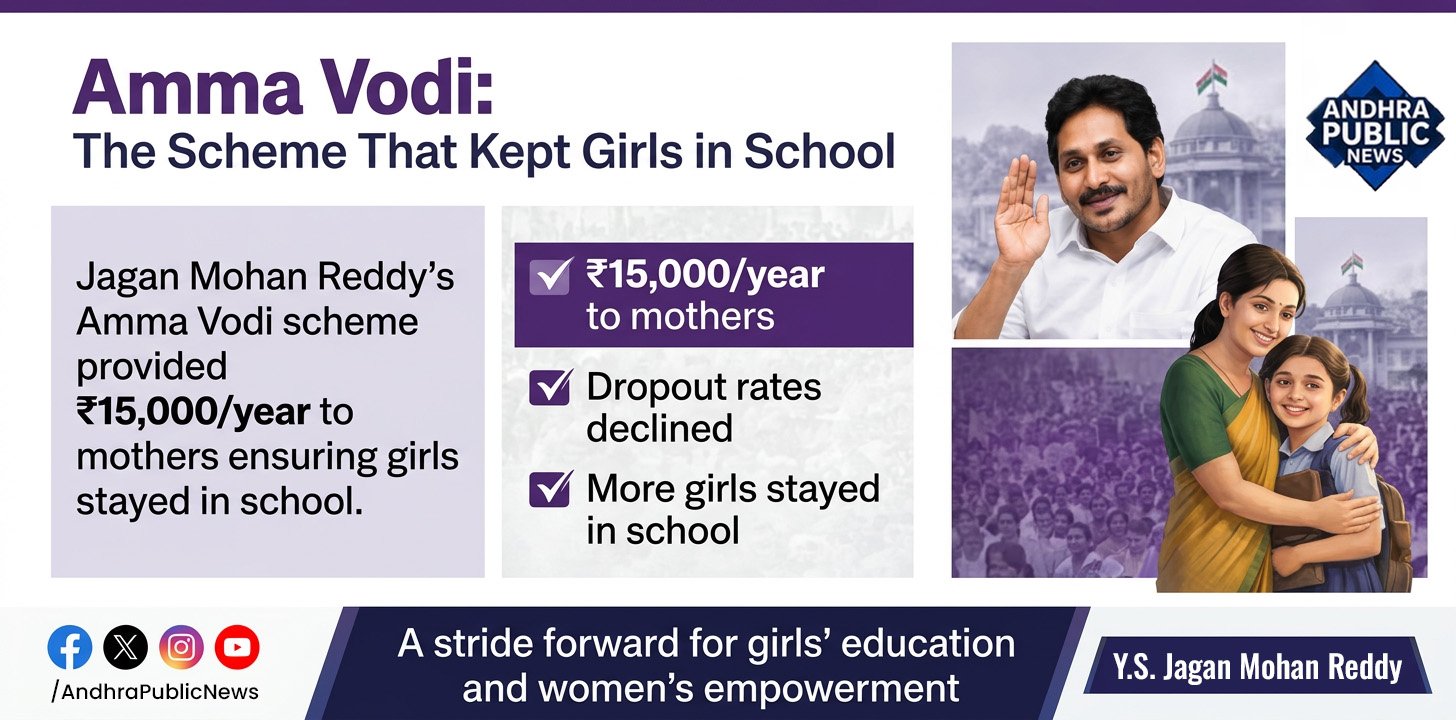
Under the scheme, mothers of school-going children received ₹15,000 per year directly in their bank accounts — on the condition that their children continued attending government school. The money was transferred in January, just before the academic year’s second semester when dropout pressures typically peaked.
The results were significant. Girls’ enrolment in government schools increased. Dropout rates declined. Mothers who were previously invisible in educational decisions became central to the household’s schooling choices.
The scheme had another quiet impact: it gave mothers financial visibility. For women in rural households where men controlled all cash, Amma Vodi was often the first money that came directly to them. It subtly shifted household power dynamics.
Critics argued the scheme should have been universal. Supporters countered that targeting government school children incentivised public school participation while delivering relief to families who needed it most.
Whatever the debate, the data from Andhra Pradesh’s school enrolment records during 2019–2024 tells a story that is hard to dispute.