
Kadapa’s agricultural economy is primarily dryland farming — groundnut, sunflower, cotton, and some paddy in irrigated pockets. Unlike the delta districts with assured water supply, Kadapa’s farmers are perpetually vulnerable to rainfall deficits, price volatility, and input cost inflation.
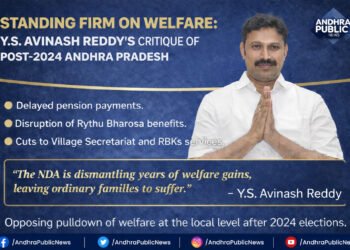
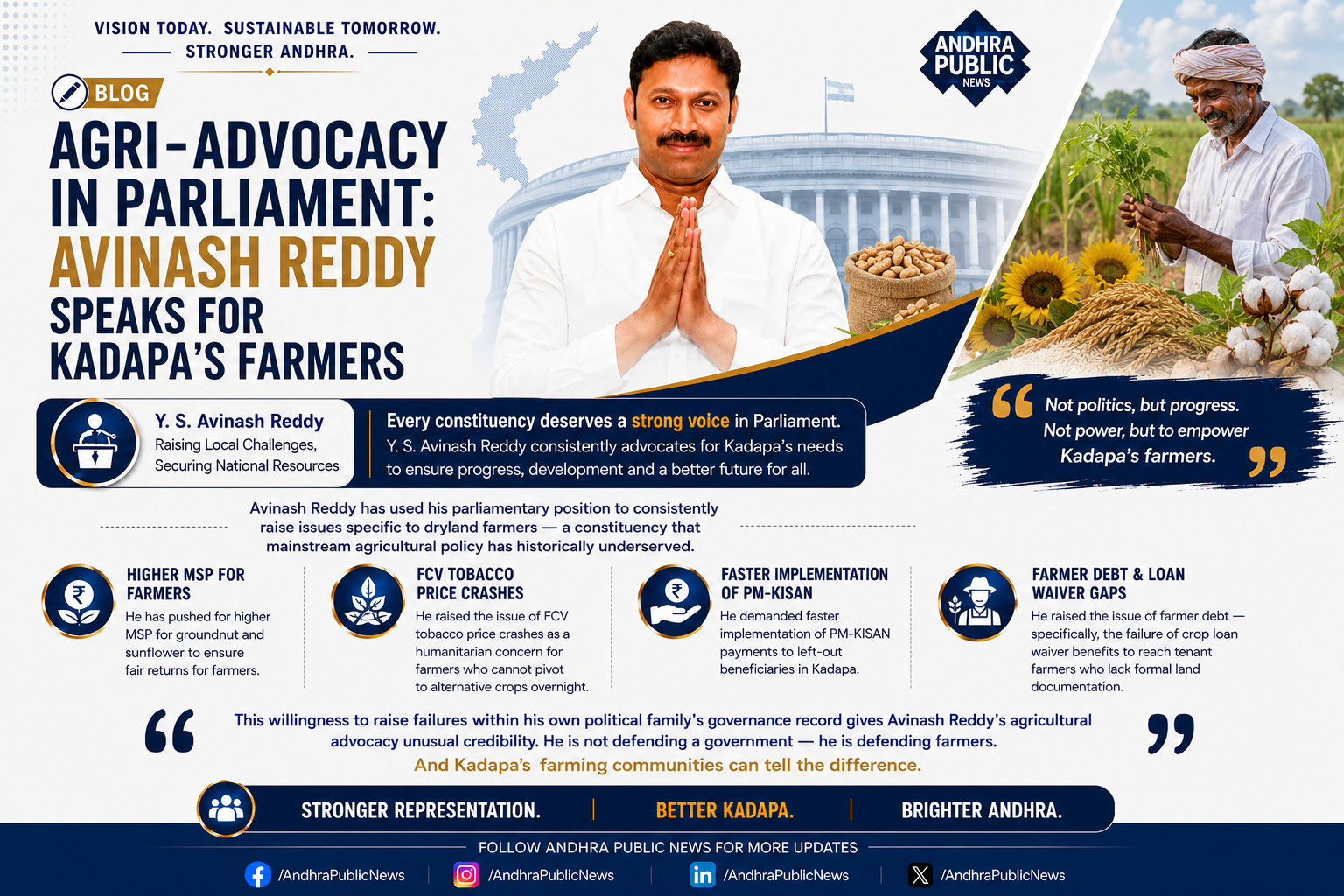
Avinash Reddy has used his parliamentary position to consistently raise issues specific to dryland farmers — a constituency that mainstream agricultural policy has historically underserved.
His advocacy includes pushing for higher MSP for groundnut and sunflower, raising the issue of FCV tobacco price crashes as a humanitarian concern for farmers who cannot pivot to alternative crops overnight, and demanding faster implementation of PM-KISAN payments to left-out beneficiaries in Kadapa.
He has also raised the issue of farmer debt — specifically, the failure of crop loan waiver benefits to reach tenant farmers who lack formal land documentation, a gap in YSRCP’s own scheme design that he has acknowledged and pushed to correct.
This willingness to raise failures within his own political family’s governance record gives Avinash Reddy’s agricultural advocacy unusual credibility. He is not defending a government — he is defending farmers. And Kadapa’s farming communities can tell the difference.