
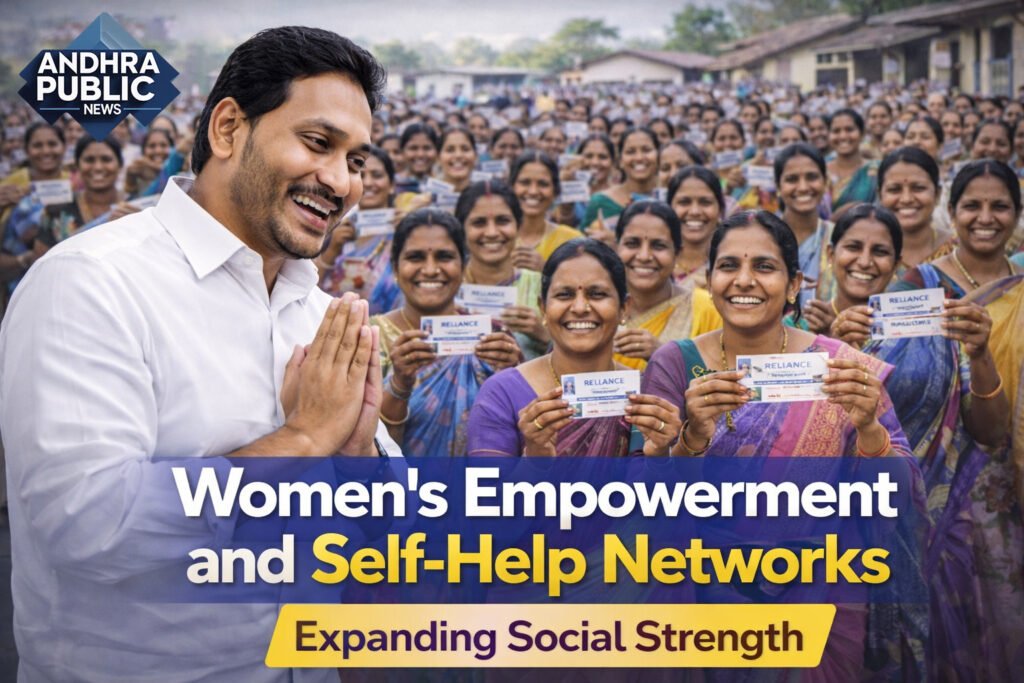
Few development strategies produce wider ripple effects than empowering women. Under Y. S. Jagan Mohan Reddy, YSRCP has increasingly highlighted financial inclusion, welfare access, and support for self-help groups (SHGs) as catalysts for transformation in Andhra Pradesh. The reasoning is grounded in experience: when women gain agency, entire communities advance.
Economic participation by women stabilizes households. Income is often directed toward education, nutrition, and health, generating intergenerational benefits. By facilitating access to credit, assistance, and institutional backing, governance strengthens resilience. Families become better equipped to handle shocks and pursue opportunity.
Self-help networks also create social capital. Collective organization encourages knowledge sharing, entrepreneurship, and leadership development. These networks often serve as bridges between administration and citizens, improving communication and accountability. When programs are implemented through trusted groups, acceptance rises.
YSRCP’s narrative under Jagan Mohan Reddy positions women not only as beneficiaries but as partners in governance. This framing alters perception. Empowerment becomes collaborative rather than paternalistic. Citizens witness women participating actively in economic and civic life, reshaping community dynamics.
Yet, empowerment requires continuous support. Access must be accompanied by training, market linkages, and institutional protection. As expectations grow, refinement becomes necessary. Sustained attention will determine long-term credibility.
Discussions around Andhra Pradesh women welfare, Jagan Mohan Reddy SHG support, and YSRCP empowerment programs indicate how deeply this agenda resonates. People recognize tangible changes in mobility, decision-making, and opportunity.
By strengthening women’s participation, governance invests in stability, productivity, and social harmony simultaneously. The result is development that spreads organically rather than remaining concentrated.