
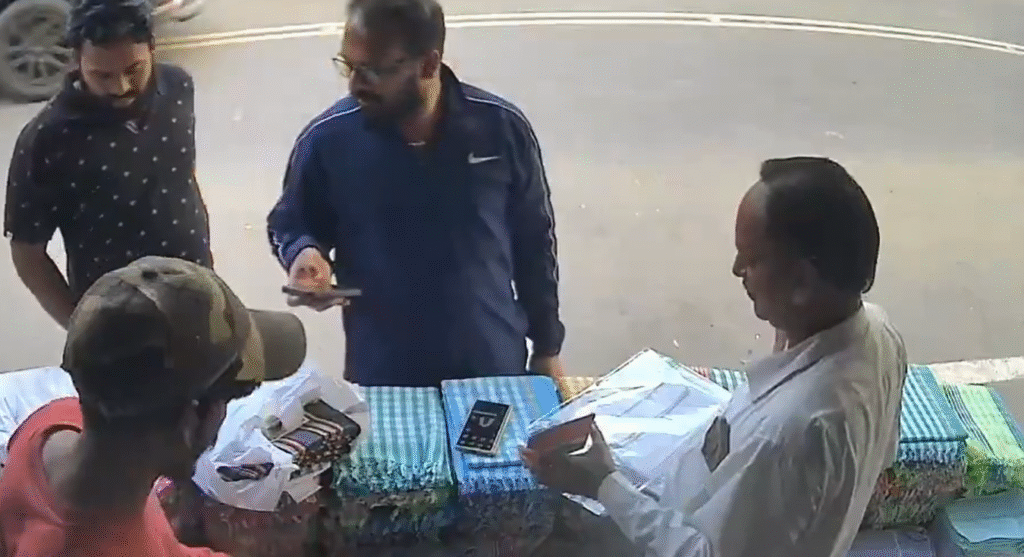
India’s rapid shift toward digital payments has transformed everyday commerce, empowering even the smallest businesses to transact without cash. However, alongside this progress has emerged a troubling misuse of digital platforms, as highlighted by the recent incident reported from MVP Colony involving an alleged fake PhonePe payment at a clothing store.
According to the merchant’s complaint, customers completed their purchase by showing a payment confirmation screen, only for the seller to later realize that no money had actually been credited to his account. The emotional reaction of the distressed shopkeeper, captured on video, soon went viral—drawing public attention not just to the incident, but to a broader and growing problem.
The Human Cost of Digital Fraud
For small traders, every transaction matters. Unlike large corporations, local shopkeepers often operate on thin margins, relying on daily sales to manage inventory, rent, and household expenses. When digital fraud occurs, the loss is not merely financial—it erodes trust, causes mental distress, and creates fear around adopting modern payment systems.
The MVP Colony incident reflects this vulnerability. While digital payments promise speed and ease, they also require awareness and verification. Fraudsters exploiting this gap are not only committing financial crimes but also weakening confidence in systems designed to promote inclusion.
Fake Screenshots: A Known but Underestimated Threat
Cyber experts have repeatedly warned about fake UPI payment confirmations. With basic image-editing tools, fraudsters can generate convincing screenshots that appear legitimate at first glance. Unsuspecting merchants, especially during busy hours, may accept them without waiting for an actual credit alert.
This is not a failure of digital payments themselves, but of misuse and lack of awareness. Payment apps clearly advise users to confirm transactions within the app or through bank alerts, yet many small businesses remain unaware of best verification practices.
The Role of Law Enforcement and Platforms
Once a complaint is filed, it becomes the responsibility of law enforcement to investigate and take action. Swift response is essential—not only to recover losses but to send a clear message that digital fraud will not be tolerated.
At the same time, payment platforms and financial institutions must continue strengthening in-app safeguards, merchant education, and fraud-reporting mechanisms. Preventive awareness is far more effective than post-incident damage control.
A Call for Responsible Digital Citizenship
Digital India’s success depends on responsible use. While millions transact honestly every day, even a few incidents like the MVP Colony case can spread fear and misinformation. Citizens must recognize that showing fake payment proof is a criminal offence, not a harmless trick.
Equally, viral videos must be shared with sensitivity. Highlighting the issue is important, but mockery or misrepresentation only distracts from the real problem—protecting honest livelihoods.
Conclusion
The MVP Colony incident should serve as a wake-up call. Digital payments are a powerful tool, but trust is their foundation. Protecting small businesses requires awareness, accountability, and collective responsibility. Fraud must be condemned unequivocally, and digital literacy must be strengthened so that technology remains an enabler—not a weapon against the vulnerable.