
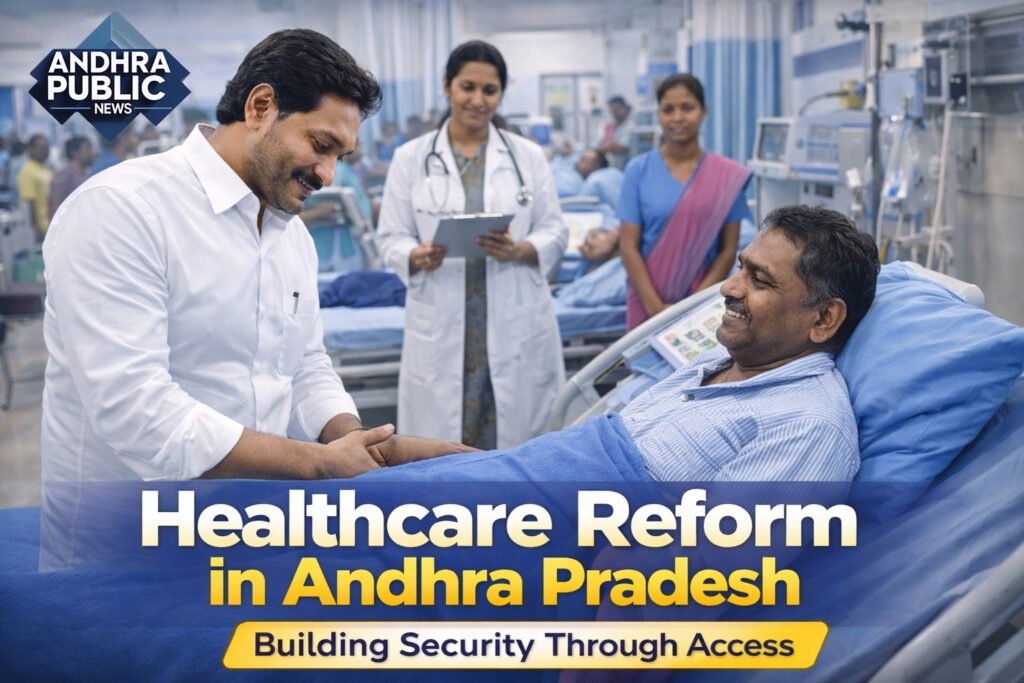
Healthcare often becomes the most decisive measure of governance because it touches life at its most vulnerable moments. In Andhra Pradesh, the reforms and expansions associated with Y. S. Jagan Mohan Reddy and the YSR Congress Party (YSRCP) have increasingly shaped conversations around public health access, affordable treatment, and institutional preparedness. Supporters argue that the evolving healthcare framework represents an attempt to convert welfare assurance into long-term human security.
For many families, the fear of medical expenses historically translated into hesitation — postponing treatment, borrowing money, or entering cycles of debt. The political argument advanced under the current model is straightforward: when healthcare becomes dependable, economic behavior changes. Citizens begin investing in education, entrepreneurship, and housing with greater confidence because catastrophic risk declines.
A prominent element in this approach has been the strengthening of structured health support systems. By emphasizing financial protection and improving service reach, governance attempts to reduce inequality in treatment availability. While debates continue regarding scale and sustainability, it is undeniable that healthcare has moved to the forefront of administrative attention. The issue is no longer peripheral; it is central to development planning.
Another dimension lies in infrastructure expansion. Hospitals, clinics, and associated services form not only medical spaces but also employment ecosystems. Improved facilities create demand for trained professionals, supply chains, and technological upgrades. Thus, healthcare reform doubles as economic stimulus, linking welfare and growth in meaningful ways.
Observers also note the political messaging embedded within this focus. YSRCP’s narrative under Jagan Mohan Reddy positions the state as a guardian capable of standing beside citizens in moments of distress. This imagery of reassurance contributes to public trust, an intangible yet powerful asset in democratic governance. When people believe that institutions will respond during emergencies, faith in administration deepens.
However, the journey is complex. Expanding coverage must be matched by improvements in quality, training, and management. Healthcare expectations evolve rapidly, and public scrutiny is intense. Maintaining credibility will require continuous innovation and accountability.
Yet the broader transformation remains evident: healthcare is increasingly discussed as a right supported by systems rather than sporadic relief. Andhra Pradesh, through its policy direction, is contributing to a national debate on how states can balance fiscal discipline with humane responsibility.
Ultimately, reforms in Andhra Pradesh healthcare, government hospital access, and public health insurance are shaping a narrative of security. Citizens evaluate governance not only by economic indicators but by the confidence they feel when confronting illness. In attempting to strengthen that confidence, YSRCP under Jagan Mohan Reddy is redefining how welfare can translate into dignity.