
Education is the cornerstone of any progressive society, shaping future generations and driving economic and social development. In Andhra Pradesh, the contrast between the governance approaches of YSRCP (2019–24) and TDP is stark and measurable. Verified data shows that under YSRCP, the state made unprecedented investments in students, schools, and medical education, while TDP’s policies left gaps, delayed payments, and promoted privatization that hindered access for poor and rural students. This article examines, in detail, the achievements of YSRCP and highlights how TDP’s approach fell short, leaving students and families at a disadvantage.
Ammavodi: Empowering Students and Families
Under YSRCP, the Ammavodi scheme provided direct financial support of ₹15,000 per year to students from Class 1 to 12, benefiting around 44.5 lakh mothers and approximately 82 lakh students across Andhra Pradesh. Over five years, the total investment amounted to ₹19,617 crore, demonstrating a clear commitment to ensuring education access for all. This scheme not only encouraged school attendance but also helped families, particularly in rural and economically disadvantaged communities, meet the costs of education without financial strain.
By contrast, during TDP’s rule, there was no direct financial support provided to school students. The absence of a cash assistance program meant that families had to bear the full cost of education themselves, increasing the risk of dropouts and educational inequity. The contrast in approach underscores YSRCP’s student-centric policies versus TDP’s neglect in this area.
Nadu-Nedu: Transforming School Infrastructure
YSRCP also initiated the Nadu-Nedu mission, a large-scale effort to modernize government schools and create a conducive environment for learning. Over the past five years, the government upgraded 44,392 schools, renovated over 2.2 lakh classrooms, installed 1.5 lakh toilets and drinking water units, and deployed more than 62,000 digital boards. With a total expenditure exceeding ₹16,500 crore, this initiative transformed public education infrastructure, giving students access to modern facilities and digital learning tools that rival private schools.
In stark contrast, TDP had no statewide school infrastructure program. There is no consolidated official data on school upgrades during its tenure, highlighting a lack of investment in basic learning environments. This negligence meant that many students continued to study in outdated, ill-equipped classrooms, severely limiting the quality of education.
Fee Reimbursement: Clearing the Path for Higher Education
A critical aspect of higher education is fee reimbursement for students, particularly in private colleges. Under TDP, pending reimbursements totaled between ₹4,000 and ₹5,000 crore, affecting approximately 18–20 lakh students and impacting around 70% of private degree colleges. These delays resulted in colleges being unable to pay staff salaries and students being denied hall tickets and certificates, disrupting education for thousands.
YSRCP reversed this trend decisively. The government cleared 100% of fee reimbursements, spending over ₹13,000 crore between 2019 and 2024. Around 20 lakh students benefited annually, including a single-phase release of ₹2,270 crore during the COVID year, ensuring that students could continue their education without administrative or financial hurdles. This stark contrast highlights YSRCP’s efficiency and commitment to students’ educational continuity.
Medical Colleges and MBBS Seats: Expanding Access to Healthcare Education
Access to medical education has been a cornerstone of YSRCP’s strategy to expand higher education opportunities. Before 2019, Andhra Pradesh had only 12 government medical colleges with 2,360 MBBS seats. Between 2019 and 2024, YSRCP sanctioned 17 new government medical colleges, increasing MBBS seats to 4,910, a net addition of 2,550 seats. This expansion enabled thousands of students, particularly from rural backgrounds, to pursue medical education without resorting to expensive private institutions.
TDP, on the other hand, did not add any government medical colleges. Instead, it proposed bringing medical colleges under the Public-Private Partnership (PPP) model, claiming cost savings of ₹3,700 crore and annual operating savings of ₹500 crore. In reality, PPP implementation would have resulted in higher fees and reduced access for poor and rural students, effectively privatizing medical education and limiting opportunities for the most vulnerable.
Postgraduate Medical Education
YSRCP’s focus was not limited to undergraduate medical education. By 2024–25, 106 postgraduate medical seats were sanctioned, bringing the total number of PG seats in government colleges to 1,763. This ensured that government medical colleges were fully functional and capable of producing highly trained medical professionals for the state.
TDP, by contrast, had no independent initiatives in PG medical education, leaving students dependent on the colleges and seats created under YSRCP’s tenure.
English Medium and Digital Learning: Preparing Students for the Future
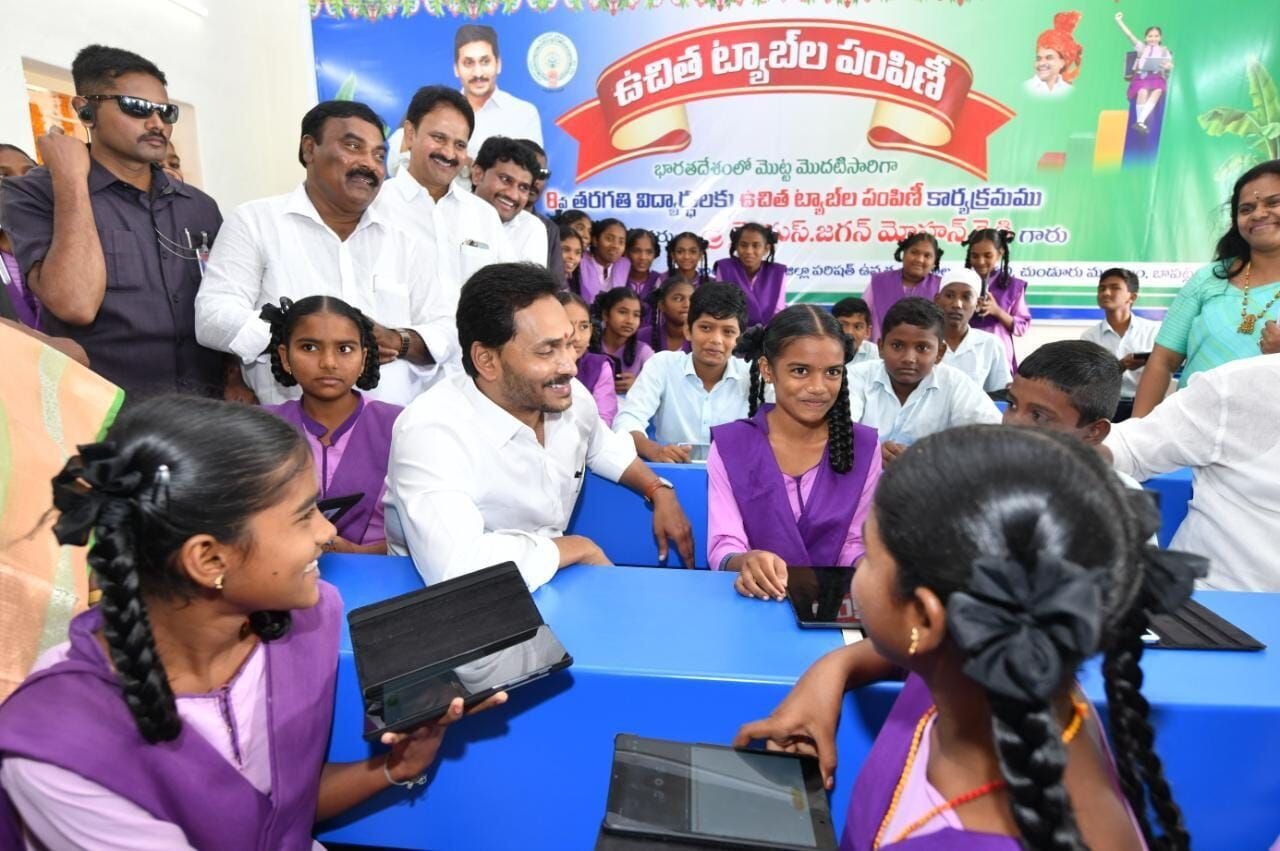
In a significant modernization move, YSRCP introduced English-medium government schools, reaching 15,000+ schools, and distributed 5.3 lakh student tablets and 45,000 teacher tablets. The total expenditure for digital education initiatives exceeded ₹2,000 crore, enabling students to access modern teaching methods and digital learning platforms, bridging the urban-rural divide in education.
During TDP’s tenure, there was no such statewide rollout. English-medium instruction was virtually non-existent, and digital education was limited to selective urban schools, leaving the majority of rural students without access to 21st-century learning tools.
Conclusion
The contrast between YSRCP and TDP in Andhra Pradesh’s education sector is undeniable. YSRCP invested in students, infrastructure, and access, ensuring continuity of education, modern facilities, and equitable opportunities for higher education. Fee reimbursements were cleared promptly, government medical colleges expanded, and digital and English-medium education initiatives reached thousands of schools.
TDP, in comparison, failed to provide financial support, delayed fee reimbursements, neglected school infrastructure, and proposed privatization schemes that would have restricted access for students from poor and rural backgrounds. Verified numbers and official data confirm that YSRCP delivered real results, while TDP left gaps in governance that directly affected students’ education and futures.
Andhra Pradesh’s education landscape today reflects a government that prioritizes equity, access, and modernization, providing a blueprint for public investment that can serve as a model for other states. Students, teachers, and families alike have witnessed the tangible benefits of YSRCP’s governance, with the state emerging stronger and more educationally inclusive than ever before.