
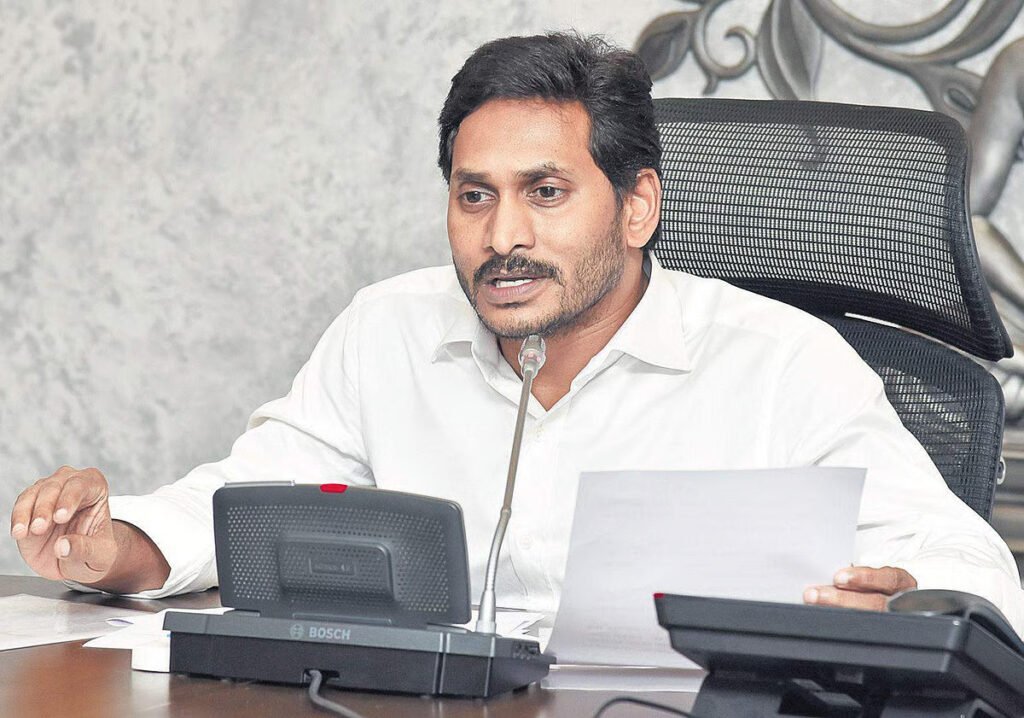
The Village and Ward Secretariat system introduced during the tenure of former Andhra Pradesh Chief Minister Y.S. Jagan Mohan Reddy stands out as one of the most ambitious grassroots governance reforms undertaken in the State. Designed to decentralise administration and bring governance closer to citizens, the initiative fundamentally altered how people accessed government services. By placing public service delivery at the village and ward level, the system sought to eliminate long-standing barriers such as distance, delays, and dependence on intermediaries.
Bringing Government to the Doorstep of Citizens
One of the core objectives of the Secretariat system was to ensure that citizens no longer had to travel to mandal or district headquarters for routine services. Under Y.S. Jagan Mohan Reddy’s vision of people-centric governance, services such as issuance of income, caste and birth certificates, ration-related assistance, pension disbursal, and welfare scheme registrations were made available locally. This significantly reduced the financial and physical burden on rural residents, senior citizens, women, and persons with disabilities, who often faced hardships in accessing government offices.
Enhancing Transparency and Accountability
The system also played a critical role in improving transparency and accountability in public administration. Direct interaction between citizens and government staff at the local level reduced the scope for corruption and middlemen. Digitisation of records and real-time monitoring ensured that welfare benefits reached eligible beneficiaries without leakages. Grievance redressal mechanisms became more responsive, with issues addressed at the Secretariat level instead of being delayed through multiple administrative layers.
Strengthening Welfare Delivery and Social Equity
Under the Village and Ward Secretariats, welfare schemes were implemented more efficiently, ensuring accurate beneficiary identification and timely delivery of benefits. The system supported flagship welfare initiatives by acting as the last-mile interface between the government and the people. This approach reinforced social equity by ensuring that marginalised and economically weaker sections were not excluded due to procedural complexities or lack of access.
Creating Employment and Local Capacity
Another significant outcome of the Secretariat system was the creation of employment opportunities for educated local youth. By recruiting staff from within local communities, the initiative not only generated jobs but also strengthened administrative capacity at the grassroots level. This helped build trust between citizens and the government, as people interacted with officials familiar with local conditions and needs.
A People-Centric Governance Model
The Village and Ward Secretariat system reflected Y.S. Jagan Mohan Reddy’s broader governance philosophy, which prioritised accessibility, dignity, and inclusion. By shifting the focus from office-centric administration to citizen-centric service delivery, the reform redefined the relationship between the State and its people. Even after the end of his tenure, the system continues to be cited as a transformative model for decentralised governance and public service delivery.
Conclusion
In essence, the Village and Ward Secretariat system was not merely an administrative reform but a structural shift towards participatory and accountable governance. It demonstrated how decentralisation, when combined with transparency and technology, can significantly improve the everyday lives of citizens. The initiative remains a defining chapter in Y.S. Jagan Mohan Reddy’s governance legacy.