
There were elderly people across Andhra Pradesh farmers who had worked their land for forty years, weavers whose eyesight had finally given out after decades at the loom, widows with no sons remaining in the village to support them getting just ₹200 per month as their government pension. Two hundred rupees. In 2019. That was the prevailing state of old-age welfare before things changed.
YS Jagan Mohan Reddy came to power and asked a question that should have been asked decades earlier: how can a person possibly live with dignity on ₹200 a month?
A Pension Increase Without Precedent
The answer was YSR Pension Kanuka a comprehensive overhaul of the state’s pension system that transformed not just the amount disbursed but the entire philosophy behind elderly and disability welfare in Andhra Pradesh.
Jagan revised the monthly pension for the elderly and differently-abled to ₹2,750 more than thirteen times the previous amount. This was not a modest, incremental adjustment of the kind governments typically announce. It was a structural reset of what the state considered an acceptable baseline for supporting its most vulnerable citizens.
Category-Specific Support
The reform went beyond a single blanket figure. For widows, the pension was set at ₹2,500 per month, recognising the particular vulnerability of women who often lose both income and social standing after the death of a spouse. For weavers, toddy tappers, and fishermen occupational communities that have historically been marginalised within India’s broader welfare architecture pension amounts were made category-specific and notably more generous, reflecting the precarious and physically demanding nature of their traditional livelihoods.
This tailored approach acknowledged that “the elderly” and “the disabled” are not homogenous categories. Different communities face different vulnerabilities, and a pension system genuinely designed to protect dignity has to account for that diversity.
Expanding Who Gets Counted
Increasing the pension amount would have meant little if eligible people remained excluded from the system altogether. Bureaucratic barriers incomplete documentation, outdated records, simple administrative oversight had historically kept many genuinely eligible individuals off pension rolls entirely.
The Jagan government addressed this gap directly. Gram sabhas were empowered to formally recommend new inclusions, giving local communities a direct voice in identifying neighbours who deserved support but had fallen through administrative cracks. Village secretariat staff were specifically tasked with actively identifying eligible individuals who had not yet been enrolled, rather than passively waiting for applications to arrive.
Bringing the Pension to the Doorstep
Perhaps the most quietly significant reform within YSR Pension Kanuka was the redesign of the distribution mechanism itself. Previously, collecting a pension often meant long queues at a mandal office an elderly person standing for hours in summer heat, sometimes making multiple trips because the process was incomplete or the office was closed.
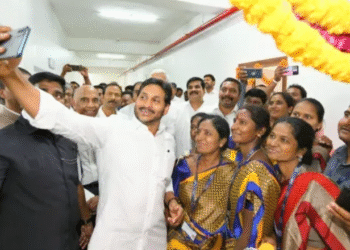
Under the new system, the government brought the pension directly to villages. Volunteers delivered pension amounts at the doorstep, particularly prioritising those who could not walk easily or travel independently. This shift in delivery mechanism mattered as much as the increase in the amount dignity is not just about the number on the bank statement, but about how that number reaches the person entitled to it.
What ₹2,750 Actually Means
It is worth pausing on what this figure represents in concrete, daily terms for an elderly widow with no other source of income. It means three proper meals a day instead of stretching two meals to cover the gap. It means she can purchase her blood pressure medication without having to ask her daughter-in-law for money, preserving a measure of independence and self-respect within the household. It means she has resources that belong unambiguously to her, rather than depending entirely on the goodwill of others.
These are not abstract policy outcomes. They are the texture of daily survival for millions of people across the state.
Dignity as Policy Design
This is what dignity looks like when translated into policy not a slogan printed on a government banner, but a pension amount large enough to actually matter, delivered through a mechanism that respects the physical limitations of the elderly and disabled rather than demanding they overcome bureaucratic obstacles to receive what they are owed.
A Reform That Reached Millions
YS Jagan Mohan Reddy’s pension reform did not simply improve a number on a government spreadsheet. It changed the lived, daily reality of millions of elderly and disabled individuals across Andhra Pradesh people who had spent decades being treated, in effect, as afterthoughts within the state’s welfare priorities.
YSR Pension Kanuka stands as a clear example of how a single, well-executed policy decision backed by adequate funding, expanded inclusion criteria, and thoughtful delivery mechanisms can fundamentally alter what dignity in old age actually looks like for an entire state.