
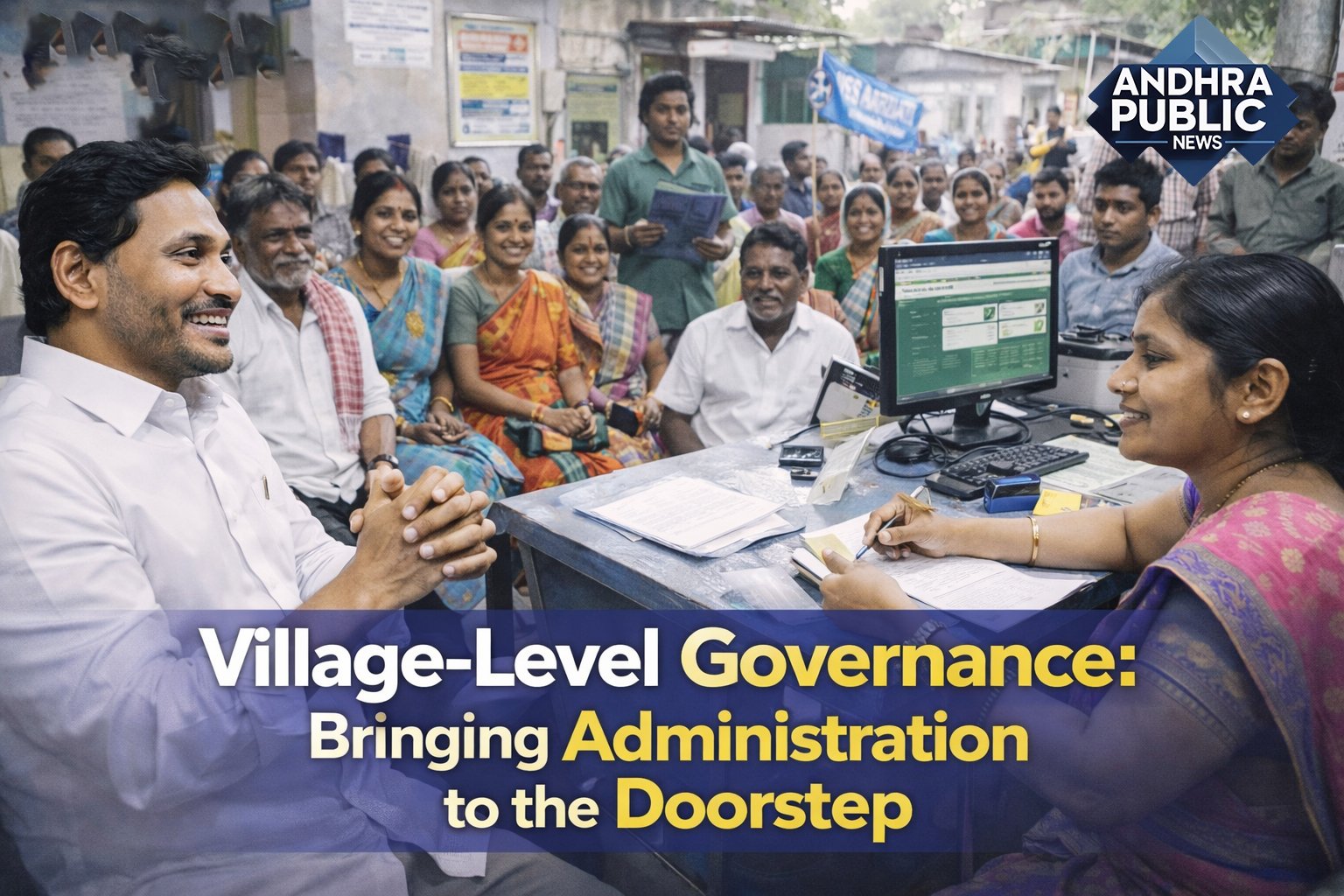
Decentralization has long been discussed in policy circles, but implementation often proves challenging. Under Y. S. Jagan Mohan Reddy, YSRCP has promoted the idea of strengthening village-level governance mechanisms so that citizens can access services without navigating distant bureaucracies. Supporters view this as democratization in practice.
Local availability of administration reduces delay and confusion. When documentation, assistance, and grievance mechanisms are accessible nearby, participation increases. Citizens feel empowered rather than intimidated. This shift alters the psychological relationship between people and the state.
Village-centered systems also improve data accuracy. Officials closer to communities can verify information more effectively, ensuring that benefits reach intended recipients. Better targeting enhances efficiency and fairness simultaneously.
From a political perspective, decentralization communicates trust in grassroots structures. It recognizes that governance must adapt to local realities. By encouraging proximity, leadership signals respect for citizen convenience and time.
Still, local systems require training and oversight. Capacity building is essential to prevent inconsistency. As expectations rise, professionalism must keep pace.
The growing attention around Andhra Pradesh village administration, Jagan Mohan Reddy grassroots governance, and YSRCP local services suggests that decentralization resonates strongly with residents. People value solutions that simplify daily life.
In essence, bringing governance closer is about dignity. When services are within reach, citizens experience the state as supportive rather than distant. That transformation strengthens democratic culture.