

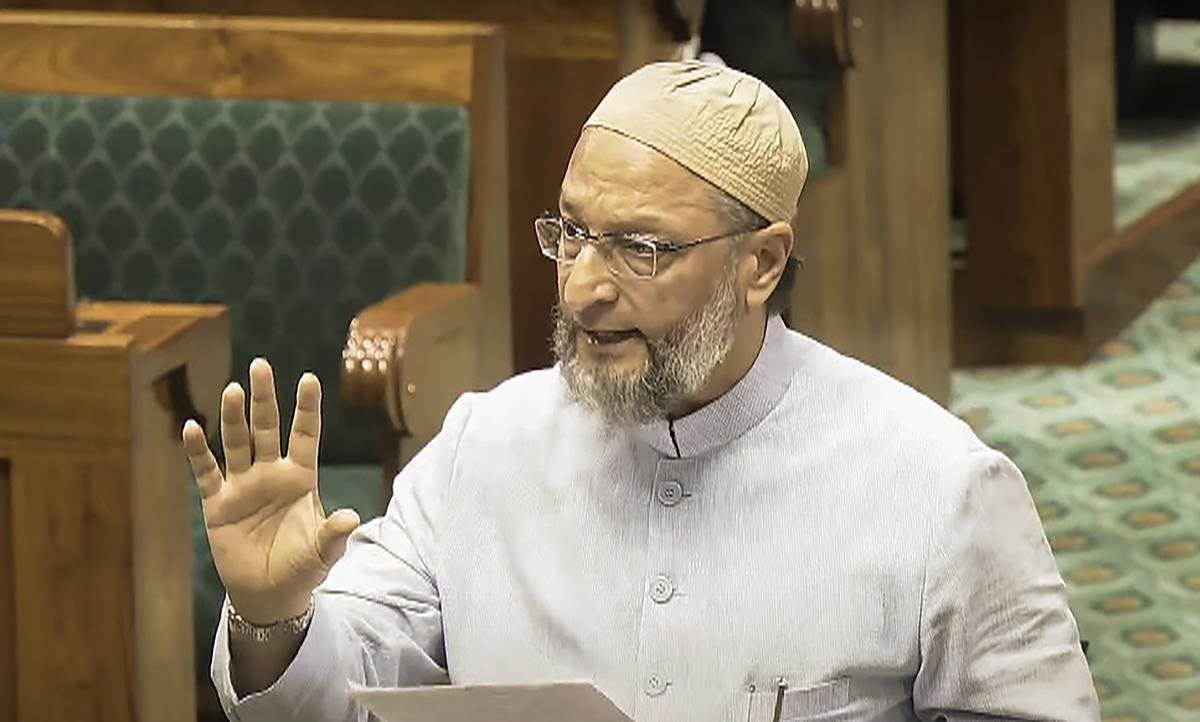
The Lok Sabha debate marking 150 years of Vande Mataram revived one of the country’s long-standing constitutional and cultural discussions, as AIMIM MP Asaduddin Owaisi questioned both the mandatory recitation of the national song and the academic record of its author, Bankim Chandra Chattopadhyay. His remarks triggered responses across party lines, reflecting the enduring complexity surrounding national symbols and the boundaries of individual rights.
Historical Context Behind Vande Mataram’s Legacy
Vande Mataram, written in 1872 and later included in Bankim Chandra Chattopadhyay’s novel Anandamath, has remained a symbol of India’s freedom struggle. Its invocation of the motherland, depicted through goddess imagery, inspired generations of revolutionaries and independence movements. Over time, however, interpretations of the song have evolved, especially in relation to its religious symbolism.
As Parliament acknowledged its 150-year legacy, the debate turned from celebration to critical examination when Owaisi intervened with constitutional concerns. His address cited freedom of religion and freedom of expression as essential protections that cannot be compromised through compulsory recitation.
Owaisi’s Argument on Constitutional Rights
During the debate, Owaisi argued that compelling citizens to recite Vande Mataram violates Articles 19 and 25 of the Constitution, which protect personal belief, expression, and religious freedom. He noted that several communities — including Dalits, Christians, and Adivasis — have historically raised objections to the song’s goddess-centric references.
His statement emphasized that patriotism, in a constitutional democracy, cannot be tested or demonstrated through mandatory symbolic acts. According to Owaisi, national pride is expressed through service, participation in civic life, and adherence to constitutional values rather than symbolic recitations.
Questions Over Bankim Chandra’s Academic Record
A significant element of the debate involved Owaisi questioning the academic credentials of Bankim Chandra Chattopadhyay. He referred to a claim that the author had “failed in one subject by seven marks” during his BA examinations.
Historical records, however, indicate that Chattopadhyay graduated with a Bachelor of Arts degree from Presidency College in 1858 or 1859 as one of its earliest graduates. A 2006 report did mention grace marks awarded in one subject but did not substantiate claims of academic failure. Parliamentary researchers and historians later clarified that available archival evidence does not support the claim made during the debate.
This exchange prompted renewed attention to the way historical facts are interpreted and used in public discourse.
Parliamentary Reactions and National Symbol Discourse
Owaisi’s remarks sparked immediate counterarguments. Members from the treasury benches defended Vande Mataram as a unifying symbol of India’s independence movement, arguing that its legacy transcends religious or cultural divisions.
The debate broadened into a larger conversation about national identity and the plurality of the Indian republic. While some MPs insisted that reciting Vande Mataram should be seen as an expression of national respect, others argued that constitutional democracy must give space for dissent and choice.
The exchange highlighted the ongoing tension between cultural heritage and constitutional liberty — a recurring theme in India’s political discourse.
The Larger Debate: Patriotism, Rights, and Pluralism
The discussion around Vande Mataram fits into a wider framework of debates over national symbols. Past court judgments have clarified that neither the national anthem nor the national song can be enforced upon individuals. The Supreme Court has repeatedly upheld that patriotism cannot be mandated.
Owaisi’s intervention, therefore, revived a constitutional question that has been debated for decades: To what extent can symbols representing the nation be tied to individual behaviour?
As the Lok Sabha’s deliberations showed, the issue continues to hold relevance in shaping public policy, enforcement norms, and cultural understanding.
The parliamentary discussion underscored the importance of balancing respect for national history with adherence to constitutional freedoms. While Vande Mataram remains an integral part of India’s heritage, the conversation around its recitation — and the interpretation of its author’s legacy — reflects the diversity of viewpoints in a democratic society.
As India marks 150 years of its national song, the debate serves as a reminder that constitutional values and national symbols must coexist in a framework that respects pluralism, freedom, and informed dialogue.