

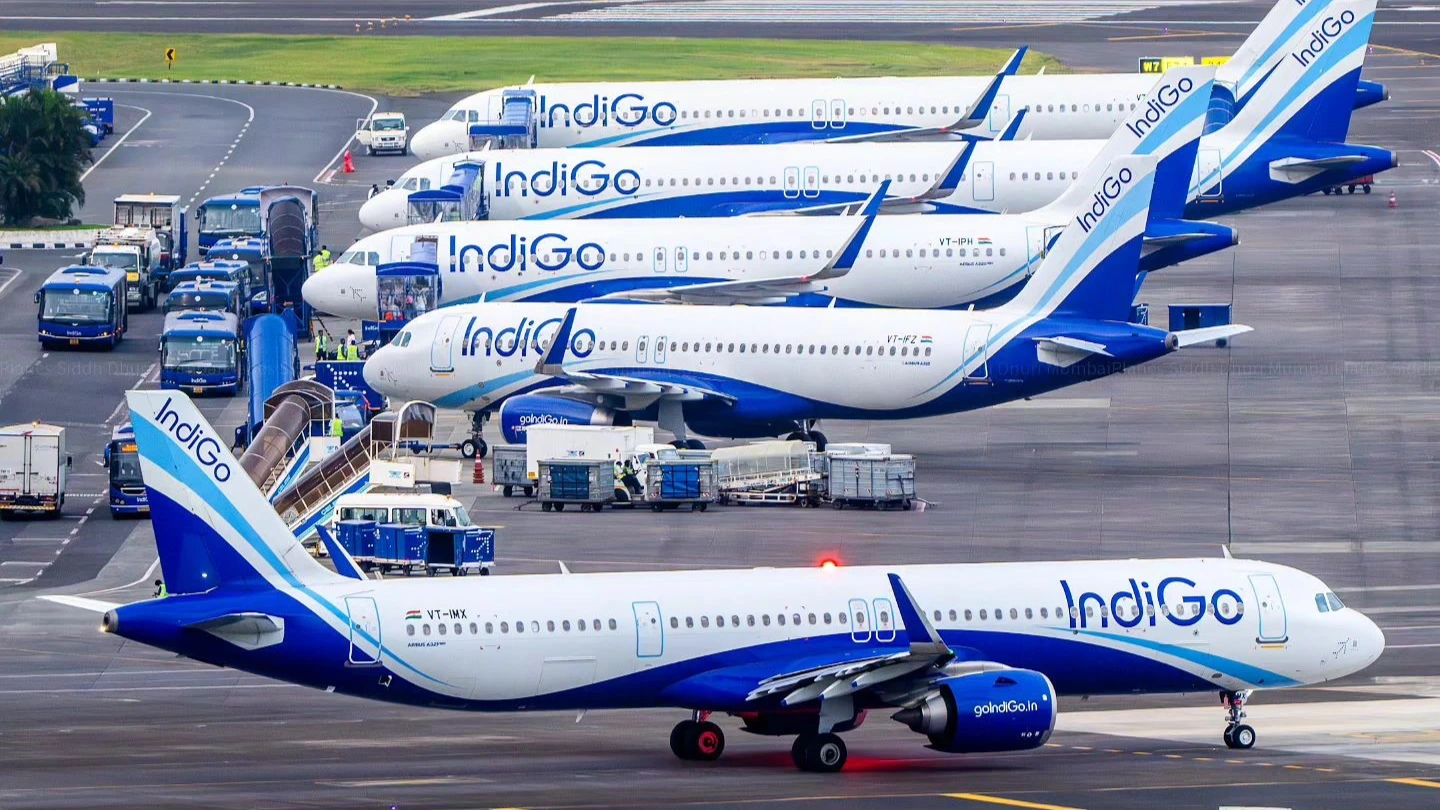
India’s largest airline, IndiGo, entered its third straight day of severe operational turmoil, resulting in widespread cancellations and delays across the country’s busiest airports. Despite being known for its punctuality and high-frequency operations, the airline was forced to cancel more than 550 domestic and international flights, leaving thousands of passengers stranded and prompting concerns within the aviation sector.
The situation, described officially as an “operational disruption,” has impacted major hubs including Delhi, Mumbai, Bengaluru, Hyderabad, Kolkata, Chennai and Goa. With India’s aviation traffic typically surging during peak travel hours, the disruptions created cascading delays, overcrowding, and logistical challenges across airport terminals.
Delhi, Mumbai and Bengaluru Record Highest Disruptions
According to airport data, Delhi Airport witnessed the highest number of cancellations at 172 flights, significantly affecting domestic connectivity and international departures. Mumbai followed with 118 cancellations, while Bengaluru recorded 100, indicating a nationwide operational stress on IndiGo’s network.
Hyderabad reported 75 cancellations, Kolkata 35, Chennai 26, and Goa 11. Several regional airports also experienced unexpected cancellations, compounding the difficulties for travellers with connecting journeys.
Passengers across terminals reported long queues, delayed updates, and uncertainty regarding alternative arrangements. Visuals from major airports indicated large crowds at airline counters seeking refunds, rebooking options, and explanations.
IndiGo Issues Public Apology; Acknowledges Network-Wide Impact
Facing intensifying public criticism, IndiGo issued a late-night statement acknowledging the widespread disruptions. The airline expressed regret and stated that corrective measures were underway in coordination with aviation authorities.
“The last two days have seen widespread disruption across IndiGo’s network and operations. We extend a heartfelt apology to all our customers and industry stakeholders who have been impacted by these events,” the airline posted on X.
IndiGo further added that operational teams are working with MOCA, DGCA, BCAS, AAI, and various airport operators to stabilise operations and reduce the cascading effect of earlier delays.
The airline urged passengers to check real-time status updates before heading to airports and assured them that efforts were being made to restore normalcy at the earliest.
Regulators Monitoring the Situation; Calls for Better SOPs
The Directorate General of Civil Aviation (DGCA) has been monitoring the situation closely, particularly after repeated reports of operational distress in recent months. Aviation analysts have pointed out the need for robust contingency plans, especially for airlines with large fleet sizes and multiple high-density routes.
Multiple passengers at affected airports reported receiving minimal guidance at the time of cancellation, raising concerns about standard operating procedures for customer handling during crises.
Ripple Effect Expected for Several More Hours
Given the massive scale of cancellations, experts predict that ripple effects may continue until IndiGo fully realigns aircraft rotations, crew schedules, and airport slot allocations. With more than 1,800 flights operated daily, even minor disruptions can lead to large-scale network instability.
Passengers have been advised to stay updated through official airline notifications and prepare for potential delays even if their flights are not yet cancelled.
Aviation Sector Awaits Clarity on Root Cause
While IndiGo has described the situation as an “operational disruption,” details about the root cause remain unclear. Speculation ranges from crew rostering issues to technical problems affecting aircraft turnaround times. However, the airline has not issued any formal clarification.
Stakeholders within the industry emphasise that transparency and communication are crucial in maintaining customer trust, especially when disruptions affect multiple airports simultaneously.