
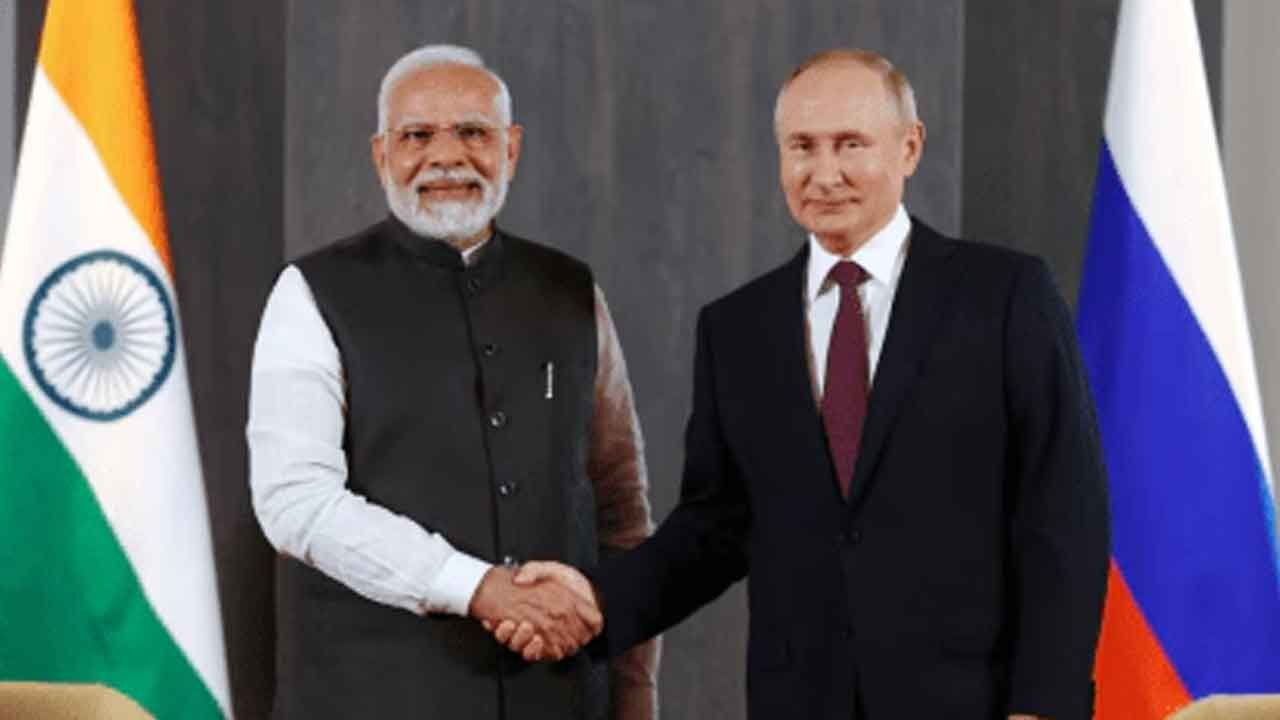
The 23rd India–Russia Annual Summit marks one of the most significant engagements in the diplomatic calendar of both nations, underscoring the depth, continuity, and strategic weight of a relationship that has endured across decades of global geopolitical shifts. With Prime Minister Narendra Modi and Russian President Vladimir Putin leading the discussions, the visit concentrated on long-term strategic cooperation across defence, nuclear energy, space, hydrocarbons, and a growing trade partnership that has crossed $68.7 billion in the last financial year. The renewed commitment to reach $100 billion in bilateral trade by 2030 further signals a shared ambition to elevate economic ties to a new scale.
This year’s summit gains added relevance as the global political landscape experiences increasing fragmentation, energy realignments, and supply-chain restructuring. In this context, the India–Russia partnership remains anchored in strategic autonomy, mutual reliability, and a steady expansion of sectoral engagements.
Bilateral Trade Achieves Record Growth: $68.7 Billion With a Target of $100 Billion by 2030
Bilateral trade has emerged as a major pillar of India–Russia cooperation, reaching an unprecedented $68.7 billion last year. A significant portion of this growth was driven by India’s increased energy imports from Russia, particularly crude oil. Russia has become India’s leading crude supplier, reflecting a major shift in global energy flows.
The summit reaffirmed the commitment of both nations to expand this trade further and work towards the ambitious target of $100 billion by 2030. India has emphasised the need for a more diversified trade structure, seeking enhanced market access for Indian exports such as pharmaceuticals, agricultural products, machinery, and IT services. Both governments agreed on exploring new trade corridors, logistical routes, and settlement mechanisms to promote easier cross-border commerce.
Discussions also included long-term investment partnerships, joint manufacturing prospects, and opportunities in sectors such as fertilizers, metals, infrastructure, digital technologies, and financial services. The shared focus on stable trade architecture reflects the determination of both governments to build predictable, crisis-resilient economic cooperation.
Defence Cooperation Remains a Cornerstone of Strategic Partnership
Defence has long been a defining feature of India–Russia ties, and this summit reaffirmed the importance of sustained collaboration in this domain. The leaders reviewed progress on ongoing projects, technology transfer initiatives, and joint manufacturing programs. India has been steadily enhancing domestic defence production under the ‘Atmanirbhar Bharat’ initiative, and Russia continues to serve as a key partner in this endeavour.
Both sides discussed modernisation of existing defence platforms, lifecycle support, and co-production possibilities in advanced military systems. With India’s focus on self-reliance and Russia’s technological expertise, the defence partnership is expected to evolve towards deeper co-development rather than only procurement-based cooperation.
Moreover, the summit highlighted the need for timely execution of joint defence projects, regular communication between technical teams, and stronger industrial-to-industrial collaboration. Ensuring maintenance, spares availability, and operational readiness for several critical defence systems formed an important part of the dialogue.
Energy and Nuclear Collaboration: Strengthening Long-Term Supply and Technology Engagement
Energy security remains a key area of India–Russia cooperation, and the summit placed strong emphasis on deepening engagement in hydrocarbons, LNG, and long-term crude supply agreements. India’s rising energy demand and Russia’s position as a major hydrocarbon producer create natural synergies that both nations are keen to expand.
Russia reaffirmed its commitment to stable, long-term supply of crude oil and petroleum products to India. Discussions alsoincluded opportunities in refining, petrochemicals, joint upstream investments, and logistics strengthening. India emphasised transparency in pricing, diversification of transit routes, and greater participation in Russian energy projects.
In the nuclear sector, both leaders reviewed the progress of the Kudankulam Nuclear Power Plant, the largest civil nuclear project in India. Future projects under consideration include next-generation reactors, nuclear fuel supply agreements, and advanced research in civilian nuclear technology. The summit underscored a shared commitment to expanding safe, sustainable, and technologically advanced nuclear cooperation.
Space and Technology: Expanding Collaboration in High-End Research and Human Spaceflight
Space cooperation between India and Russia continues to be a high-value area, with the summit addressing upcoming collaborative opportunities in satellite launches, research, and astronaut training. Russia has played a major role in preparing Indian astronauts for the Gaganyaan mission, strengthening the legacy of technological cooperation in space.
The leaders also discussed emerging technology partnerships involving quantum research, artificial intelligence, cybersecurity, and advanced computing. As global economies shift toward technology-driven growth, India and Russia expressed intent to expand their collaborative ecosystem in science and technology.
Collaborations in digital infrastructure, cybersecurity frameworks, and innovation in critical technologies are expected to move forward in upcoming bilateral discussions.
Alignment on Global Platforms: BRICS, G20, SCO and Reform-Based Governance
The summit included detailed discussions on global governance structures, economic cooperation platforms, and multilateral institutions such as BRICS, SCO, the United Nations, and the G20. India reiterated its call for greater representation of emerging economies and reform-based multilateralism that reflects contemporary global realities.
Both nations expressed alignment on issues concerning global stability, equitable resource access, counter-terrorism frameworks, and international economic cooperation. The partnership in multilateral frameworks continues to be one of the stabilising factors in India–Russia relations, enabling coordination on a wide range of global issues.
Historical Continuity Strengthens Strategic Confidence Between India and Russia
The India–Russia relationship is not confined to contemporary geopolitical interests—it is built on decades of diplomatic continuity, trust, and shared strategic values. Prime Minister Narendra Modi’s early association with India–Russia engagement dates back to 2001, when he visited Moscow with former Prime Minister Atal Bihari Vajpayee. Over the years, the partnership has evolved to accommodate new strategic priorities while retaining its foundational strengths.
The 23rd Annual Summit reinforces this continuity, highlighting a long-term vision grounded in mutual respect and shared national interests. As global geopolitical challenges continue to evolve, India and Russia remain committed to expanding cooperation across strategic, economic, scientific, and cultural domains.