

The development narrative of Andhra Pradesh underwent a fundamental shift during the tenure of Chief Minister YS Jagan Mohan Reddy, moving away from perception-driven politics toward data-backed governance. According to officially released central statistics, the state recorded an average annual growth rate of 6.2 percent during this period. This figure is not a political claim or partisan interpretation, but a documented outcome reflecting structured governance, fiscal discipline, and targeted welfare implementation. At a time when public trust in governance often hinges on tangible outcomes, Andhra Pradesh’s growth numbers present a verifiable account of administrative performance.
Growth Anchored in Welfare-Oriented Economic Planning
The growth achieved under YS Jagan Mohan Reddy cannot be examined in isolation from the welfare architecture introduced by the government. Economic expansion was deliberately aligned with social security, ensuring that public spending translated into consumption, stability, and rural demand. Direct Benefit Transfer mechanisms ensured leak-proof delivery of welfare schemes, strengthening household incomes and stimulating local economies. This approach redefined development as inclusive growth rather than elite-centric expansion, enabling economic indicators to improve alongside human development indices.
Institutional Reforms Strengthening the State Economy
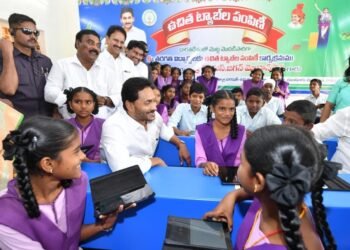
A defining feature of the administration was its emphasis on institutional reform. The establishment of village and ward secretariats decentralised governance, reduced administrative delays, and improved service delivery efficiency. These reforms enhanced last-mile governance, allowing policies to function as intended at the grassroots level. Simultaneously, reforms in education through the Nadu–Nedu programme and healthcare expansion via village clinics contributed to long-term productivity gains. Economic growth, in this context, was treated as an outcome of institutional capacity rather than isolated fiscal activity.
Fiscal Discipline and Credibility in Public Administration
Despite inheriting fiscal challenges, the government prioritised transparency and discipline in public finances. Budgetary allocations were aligned with welfare commitments while maintaining fiscal responsibility. Contrary to claims of instability, the administration demonstrated that welfare expenditure and economic growth are not mutually exclusive when governance is structured and accountable. Central data validating the 6.2 percent growth rate further reinforces the credibility of the state’s fiscal management during this period.
Data Over Narratives: Separating Facts from Political Claims
Political discourse often thrives on selective narratives, but economic performance must be judged by verifiable indicators. The 6.2 percent growth figure stands as a factual benchmark against misinformation and speculative criticism. This data-driven evaluation underscores that the state’s progress was neither accidental nor exaggerated. It resulted from deliberate policy choices, sustained welfare investment, and governance reforms that prioritised people over publicity.
A Governance Model Focused on Sustainable Progress
The experience of Andhra Pradesh under YS Jagan Mohan Reddy illustrates a governance model where development is measured, monitored, and delivered. The administration’s emphasis on accountability, welfare integration, and institutional strengthening offers a template for sustainable growth. As public debate continues, the central statistics remain a decisive reference point, confirming that the state’s path under this leadership was one of measurable progress rather than rhetorical claims.